
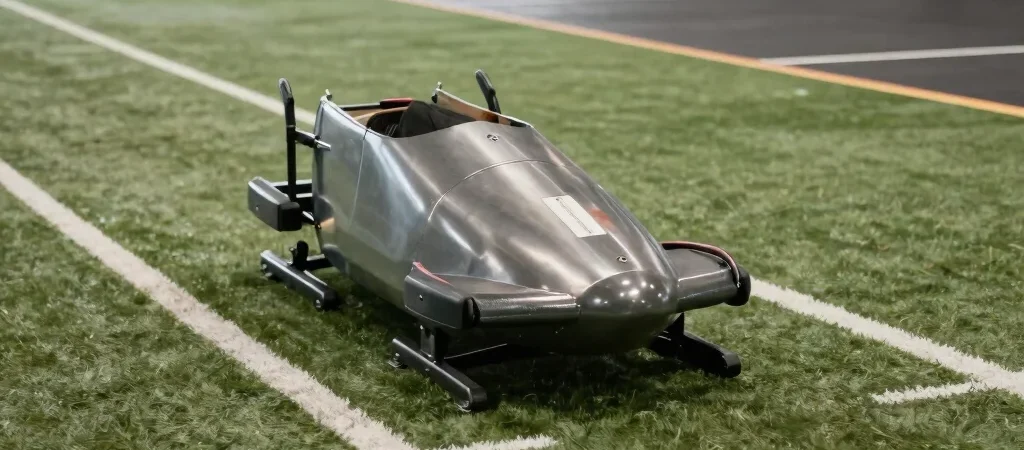
A sled that glides across one strip of turf may drag on another, even when the frame and plates have not changed. Floor material, surface condition, and the sled’s contact points all shape the push or pull. That is why a load number by itself tells only part of the story.
Keep the surface in your notes
When comparing sessions, record the sled, its load, the surface, and the distance traveled. Note whether the turf is smooth or worn, or whether the route crosses seams and transitions. These details help explain a change in feel without assuming that the sled or the person using it suddenly changed.
Rubber flooring, turf, and concrete are not interchangeable test surfaces. A route with a threshold or a rough patch can also interrupt an otherwise steady effort. If you are documenting independent research, keep the path and direction consistent where possible, and describe any variation you could not control.
Make a repeatable lane
For practical training, choose a clear lane long enough for the intended effort and check that other gym users will not cross it. Look for loose plates, floor gaps, wet patches, and obstacles before loading the sled. The return trip deserves the same attention as the push.
If a sled starts tracking differently, first check for an uneven load, debris, or a change in the contact surfaces. Make one adjustment at a time and note what you changed. That small habit turns a vague impression into shared knowledge another gym user can actually use.